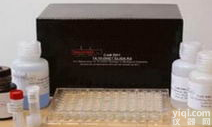
RNAwait非冻型组织RNA保存液使用说明书
- 产地:进口/国产
- 供应商:上海莼试生物技术有限公司
- 供应商报价:670
- 标签:RNAwait非冻型组织RNA保存液使用说明书

RNAwait非冻型组织RNA保存液使用说明书价格优惠,品质保证,库存现货,无效果,免费退款。公司现货销售,量大折扣,咨询。详细信息如下。
RNAwait非冻型组织RNA保存液使用说明书产品说明:
RNAwait是一种无毒的可直接使用的样品储存液,能使细胞内的RNA与RNA酶分离,可以快速可靠地保存动物组织、细胞内的RNA。组织获取后立即浸入RNAwait保存液中,在室温可以保存7天,4℃可以保存4周,-20℃、-80℃标本可以长期保存,RNA稳定存在不降解,取出后用各类方法抽提可以获得高质量的RNA。
RNAwait非冻型组织RNA保存液使用说明书操作流程:
1. 根据要保存的各样本的体积,计算出所需RNAwait用量。RNAwait的用量应当是组织体积的10倍(如100mg组织约用1ml RNAwait);离心收集2×10⁶细胞RNAwait的用量是1ml。
2. 将RNAwait按需要量分装入自备保存管中;
3. 快速将较大的组织切成厚度<0.5 cm的任意片状,立即完全浸入RNAwait中。组织的厚度一定要<0.5 cm。组织过厚则RNAwait不能有效渗入,组织中间部位的RNA不能受到保护。较小的组织(如大鼠的肾脏、,小鼠的大部分器官)取下后可以直接浸入RNAwait。
4. 保存时先将样本浸入RNAwait后置4℃冰箱过夜(4℃过夜是必需的,这样可使RNAwait完全渗入到组织中),然后转移到-20℃冰箱(RNAwait在-20℃时仍为液态,有结晶析出,是正常情况);或者在4℃冰箱过夜后,从RNAwait中取出组织块,转移到-80℃冰箱。在RNAwait中保存的标本,反复冻融至室温20次不影响RNA的质量。
RNAwait非冻型组织RNA保存液使用说明书注意事项:
1. 组织和细胞取材速度要快,在获取后应当尽快浸入RNAwait,以防止RNA降解。
2. 冰冻组织不能用RNAwait保存,因为RNAwait不能有效渗入冰冻组织。
3. 保存样品的RNA提取:样本从-20℃或-80℃冰箱取出后,复苏到室温后,取出组织块,再用于提取RNA。细胞样本则复温后低速离心收集细胞,去除RNAwait,再用于提取RNA。后继的处理(如组织匀浆)可以在室温下进行,不必在液氮中操作,RNA仍能有效得到保护。残留少量RNAwait保存液不影响后继提取RNA的质量。
RNAwait非冻型组织RNA保存液使用说明书分子生物学领域:
涉及核酸纯化、常用分子生物学试剂、PCR等相关试剂盒。
分子生物学试剂:拥有JD的价格优势,品质可信赖,市场占比庞大。
| 产品名称 | 英文名称 | 包装 |
| RNAwait非冻型组织RNA保存液使用说明书 | RNAwait RNAlater | 可根据客户要求订制 |
RNAwait非冻型组织RNA保存液使用说明书收货注意事项:
当您收到货物后,请仔细检查产品的名称、数量、质量规格是否与您订购产品*。若产生异议,请及时与我司。按照我司指令及时将货物退回,我司*时间为您安排配送正确货物。请您务必保证退还货物的包装完整性。
当您收到货物后,若发现包装破损,产品泄露等意外情况,请及时拍照留证,并将照片传回我司,我司确认后,将及时为您更换新的货物,原有货物按照我司指令处理。
我司默认货物签收24小时内无反馈,即视为您已经认同我司到货情况,未出现包装破损、货物错误等问题。
因大多情况货物是以快递形式配送,请尽量本人签收,如由您认同的其他人或第三方代为签收,也认同与您本人签收具有相同的效力,如24小时内无反馈,默认货物完整正确送达。
我司所有产品的质量追溯期为90天,若有质量异议,请务必在90天内提出,超过90天后,我司默认贵处已经认同该产品的质量。
别 名 AMPK 2; AMPK2; AMPKalpha2; PRKAA 2; PRKAA; PRKAA2; Protein kinase AMP activated alpha 2 catalytic subunit; AAPK2_HUMAN.
浓 度 1mg/1ml
规 格 0.1ml/100μg 0.2ml/200μg
抗体来源 Rabbit
克隆类型 polyclonal
交叉反应 Human, Mouse, Rat, Dog, Pig, Cow, Rabbit, Sheep
产品类型 一抗
研究领域 肿瘤 细胞生物 神经生物学 信号转导 激酶和磷酸酶 Alzheimer's
蛋白分子量 predicted molecular weight: 62kDa
性 状 Lyophilized or Liquid
免 疫 原 KLH conjugated synthetic peptide derived from human AMPK alpha 2 C-terminus
亚 型 IgG
纯化方法 affinity purified by Protein A
储 存 液 0.01M PBS, pH 7.4 with 10 mg/ml BSA and 0.1% Sodium azide
产品应用 WB=1:100-500 ELISA=1:500-1000 IP=1:20-100 IHC-P=1:100-500 IHC-F=1:100-500 IF=1:100-500
(石蜡切片需做抗原修复)
not yet tested in other applications.
optimal dilutions/concentrations should be determined by the end user.
保存条件 Store at -20 °C for one year. Avoid repeated freeze/thaw cycles. The lyophilized antibody is stable at room temperature for at least one month and for greater than a year when kept at -20°C. When reconstituted in sterile pH 7.4 0.01M PBS or diluent of antibody the antibody is stable for at least two weeks at 2-4 °C.
Important Note This product as supplied is intended for research use only, not for use in human, therapeutic or diagnostic applications.
产品介绍 The AMP activated protein kinase (AMPK) in mammals, and its homologue in Saccharomyces cerevisiae, are activated by cellular stresses associated with ATP depletion. AMPK is a heterotrimer comprising a catalytic alpha subunit with associated beta and gamma subunits. The alpha subunit has at least two isoforms (alpha 1 and alpha 2), which differ in their AMP dependence and subcellular localization, with alpha 2 complexes being partly nuclear. AMPK is activated allosterically by 5' AMP, which also promotes phosphorylation and activation by an upstream kinase, and inhibits dephosphorylation and inactivation. Elevation of AMP always accompanies depletion of ATP due to the action of adenylate kinase. Since high ATP antagonizes the activating effects of AMP, the system behaves like a cellular 'fuel gauge'. It is activated by various types of stress associated with ATP depletion, such as hypoxia, heat shock, metabolic poisoning and, in muscle, exercise. AMPK phosphorylates multiple targets which switch off anabolic pathways and switch on alternative catabolic pathways.
Function : Catalytic subunit of AMP-activated protein kinase (AMPK), an energy sensor protein kinase that plays a key role in regulating cellular energy metabolism. In response to reduction of intracellular ATP levels, AMPK activates energy-producing pathways and inhibits energy-consuming processes: inhibits protein, carbohydrate and lipid biosynthesis, as well as cell growth and proliferation. AMPK acts via direct phosphorylation of metabolic enzymes, and by longer-term effects via phosphorylation of transcription regulators. Also acts as a regulator of cellular polarity by remodeling the actin cytoskeleton; probably by indirectly activating myosin. Regulates lipid synthesis by phosphorylating and inactivating lipid metabolic enzymes such as ACACA, ACACB, GYS1, HMGCR and LIPE; regulates fatty acid and cholesterol synthesis by phosphorylating acetyl-CoA carboxylase (ACACA and ACACB) and hormone-sensitive lipase (LIPE) enzymes, respectively. Regulates insulin-signaling and glycolysis by phosphorylating IRS1, PFKFB2 and PFKFB3. AMPK stimulates glucose uptake in muscle by increasing the translocation of the glucose transporter SLC2A4/GLUT4 to the plasma membrane, possibly by mediating phosphorylation of TBC1D4/AS160. Regulates transcription and chromatin structure by phosphorylating transcription regulators involved in energy metabolism such as CRTC2/TORC2, FOXO3, histone H2B, HDAC5, MEF2C, MLXIPL/ChREBP, EP300, HNF4A, p53/TP53, SREBF1, SREBF2 and PPARGC1A. Acts as a key regulator of glucose homeostasis in liver by phosphorylating CRTC2/TORC2, leading to CRTC2/TORC2 sequestration in the cytoplasm. In response to stress, phosphorylates 'Ser-36' of histone H2B (H2BS36ph), leading to promote transcription. Acts as a key regulator of cell growth and proliferation by phosphorylating TSC2, RPTOR and ATG1: in response to nutrient limitation, negatively regulates the mTORC1 complex by phosphorylating RPTOR component of the mTORC1 complex and by phosphorylating and activating TSC2. In response to nutrient limitation, promotes autophagy by phosphorylating and activating ULK1. AMPK also acts as a regulator of circadian rhythm by mediating phosphorylation of CRY1, leading to destabilize it. May regulate the Wnt signaling pathway by phosphorylating CTNNB1, leading to stabilize it. Also phosphorylates CFTR, EEF2K, KLC1, NOS3 and SLC12A1.
Subunit : AMPK is a heterotrimer of an alpha catalytic subunit (PRKAA1 or PRKAA2), a beta (PRKAB1 or PRKAB2) and a gamma non-catalytic subunits (PRKAG1, PRKAG2 or PRKAG3). Interacts with FNIP1 and FNIP2.
Subcellular Location : Cytoplasm (By similarity). Nucleus. Note=In response to stress, recruited by p53/TP53 to specific promoters.
Post-translational modifications : Ubiquitinated (By similarity).
Phosphorylated at Thr-172 by STK11/LKB1 in complex with STE20-related adapter-alpha (STRADA) pseudo kinase and CAB39. Also phosphorylated at Thr-172 by CAMKK2; triggered by a rise in intracellular calcium ions, without detectable changes in the AMP/ATP ratio. CAMKK1 can also phosphorylate Thr-172, but at much lower lvel. Dephosphorylated by protein phosphatase 2A and 2C (PP2A and PP2C). Phosphorylated by ULK1; leading to negatively regulate AMPK activity and suggesting the existence of a regulatory feedback loop between ULK1 and AMPK.
CFN90613 http://www.chemfaces。。com/natural/Precyasterone-CFN90613.html C29H44O8 520.65 27335-85-9 Precyasterone Steroids > 98% 10mg
CFN90614 http://www.chemfaces。。com/natural/17-Hydroxy-sprengerinin-C-CFN90614.html C44H70O17 871.02 1029017-75-1 17-Hydroxy sprengerinin C Steroids > 98% 10mg
CFN90616 http://www.chemfaces。。com/natural/Ajugasterone-C-CFN90616.html C27H44O7 480.64 23044-80-6 Ajugasterone C Steroids > 99% 10mg
CFN90618 http://www.chemfaces。。com/natural/Swertianolin-CFN90618.html C20H20O11 436.37 23445-00-3 Swertianolin Xanthones > 98% 10mg
CFN90621 http://www.chemfaces。。com/natural/Swertisin-CFN90621.html C22H22O10 446.4 6991-10-2 Swertisin Flavonoids > 98% 10mg
CFN90624 http://www.chemfaces。。com/natural/Sinapine-thiocyanate-CFN90624.html C16H24NO5.CNS 368.45 7431-77-8 Sinapine thiocyanate Phenylpropanoids > 98% 20mg
RNAwait非冻型组织RNA保存液使用说明书CFN90625 http://www.chemfaces。。com/natural/Isodemethylwedelolacton-CFN90625.html C15H8O7 300.22 350681-33-3 Isodemethylwedelolacton Coumarins > 98% 20mg
CFN90626 http://www.chemfaces。。com/natural/Beta-beta-Dimethylacrylalkannin-CFN90626.html C21H22O6 370.4 34539-65-6 Beta,beta-Dimethylacrylalkannin Quinones > 98% 20mg