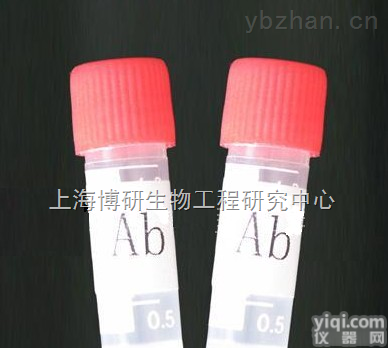
肝细胞生长因子受体抗体,Anti-C-Met/Met/HGFR抗体
- 产地:中国大陆
- 供应商:上海博研生物科技有限公司
- 供应商报价:电议
- 标签:肝细胞生长因子受体抗体,Anti-C-Met/Met/HGFR抗体,生物试剂,生化试剂,供应肝细胞生长因子受体抗体,Anti-C-Met/Met/HGFR抗体,博研生物科技有限公司上海分公司

博研生物抗体售前、售中、售后免费技术服务,欢迎致电索说明书
客服电话:021 60340850 021 60340830 021 60340820
客服QQ :827774711 349199432 372584443
产品名称 肝细胞生长因子受体抗体,Anti-C-Met/Met/HGFR抗体
产品编号 BYk-0668R
相关标记 HRP Biotin Gold RBITC AP FITC Cy3 Cy5 Cy5.5 Cy7 PE PE-Cy3 PE-Cy5 PE-Cy5.5
PE-CY7 APC Alexa Fluor 350 Alexa Fluor 488 Alexa Fluor 555 Alexa Fluor 647
浓 度 1mg/1ml
抗体来源 Rabbit OR MOUSE
克隆类型 polyclonal or monoclonal
产品类型 一抗
产品用途 科研实验,用于免疫组化实验,WB实验、IF、IP、ELISA实验,相应的标记抗体有HRP标记抗体,FITC标记,BIO等。
性 状 Lyophilized or Liquid
亚 型 IgG
肝细胞生长因子受体抗体,Anti-C-Met/Met/HGFR抗体保存条件 Store at -20 °C for one year. Avoid repeated freeze/thaw cycles. The lyophilized antibody is stable at room temperature for at least one month and for greater than a year when kept at -20°C. When reconstituted in sterile pH 7.4 0.01M PBS or diluent of antibody the antibody is stable for at least two weeks at 2-4 °C.
Important Note This product as supplied is intended for research use only, not for use in human, therapeutic or diagnostic applications.
肝细胞生长因子受体抗体,Anti-C-Met/Met/HGFR抗体产品说明:
c-Met, a member of the tyrosine kinase superfamily, is the receptor for hepatocyte growth factor, also known as scatter factor (HGF/SF). The mature c-Met protein is a disulfide-linked heterodimer with Mr=190 kDa composed of a heavily glycosylated alpha subunit that is completely extracellular in localization, and a beta subunit comprising an extracellular ligand binding domain, a single transmembrane domain, and a cytoplasmic tyrosine kinase domain. Cells expressing c-Met include epithelial cells, endothelial cells, blood cells of various types, and glomerular mesenchymal cells.
HGF/SF binding to c-Met stimulates receptor dimerization and the phosphorylation of numerous residues within the receptor’s cytoplasmic domain. Signaling proteins that are phosphorylated and/or localized in response to c-Met phosphorylation include: Grb2, Shc, Cbl, Crk, cortactin, paxillin, GAB1, PI3K, FAK, Src, Ras, ERK1 and 2, JNK, PLC gamma, AKT, and STAT3. HGF/SF stimulation of c-Met expressing cells enhances proliferation, migration, morphogenesis, and protease synthesis, characteristics that are associated with invasive cell phenotype. Many types of cancer exhibit sustained c-Met stimulation, overexpression, or mutation, including carcinomas of the colon, breast, ovary, lung, liver, prostate, thyroid, kidney, as well as melanomas and sarcomas. In addition to cancer studies, other research areas in which c-Met is under investigation include organogenesis, organ regeneration, angiogenesis and surgical wound healing.